Cold Plunging: What It’s Taught Me About Staying With Myself
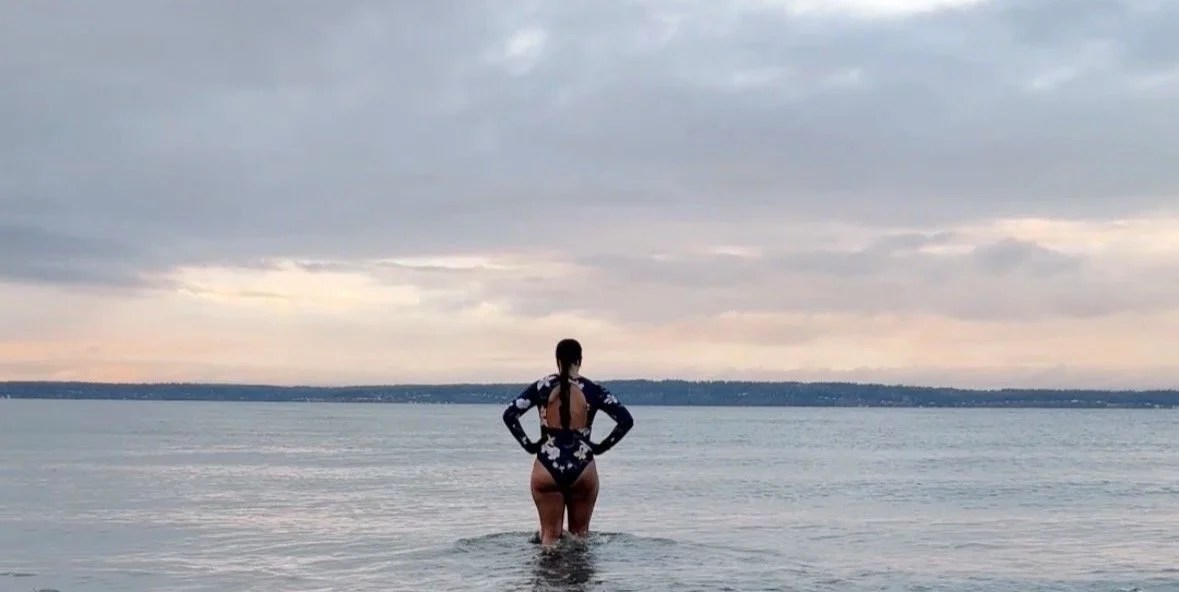
I’m not interested in making another piece of content that lists the benefits of cold plunging.
You can Google those. There are plenty.
What feels more honest—and more useful—is sharing what I’ve learned through my own body and through years of practicing cold exposure as a personal ritual.
This isn’t about optimization.
It’s about relationship.
Where I’m At Right Now
As I’m writing this, I’m cold plunging daily through December, and I’m currently 22 days in a row.
That number isn’t here to prove anything—it’s simply context. Some seasons invite consistency. Other seasons invite rest. Right now, this rhythm feels supportive and grounding in my body, so I’m honoring it.
The practice still remains responsive, not rigid.
Learning to Stay When Everything Says “Get Out”
When I first started cold plunging, my fight-or-flight response was immediate.
The second my body hit the water, everything in me screamed: nope.
I would bail. Fast.
What changed everything wasn’t staying longer—it was learning how to get control of my breath.
Cold water isn’t a monster.
It’s not attacking you.
You’re choosing to be there.
Once I slowed my breathing, my body stopped panicking. I could stay. I could regulate. I could be with the discomfort instead of fighting it.
That skill transferred directly into my real life.
Stress, Edges, and Nervous System Regulation
Cold plunging has made me far more capable of handling stress and intensity.
I know how to take myself to my edge—and stay there—without dissociating or abandoning myself. I’ve learned how to remain present in uncomfortable situations instead of shutting down or spiraling out.
That doesn’t mean it “fixes” everything.
Flying, for example, is still really hard for me. I can breathe, ground, and relax my body—but there’s a threshold where fear still feels unsafe. That’s something I continue to work with.
But that same panic is what I used to feel in cold water.
Now, I know how to stay.
It’s Not About Time in the Water
I’ve worked my way up to longer immersions because I enjoy them—not because anyone needs to.
You don’t need 20 minutes.
You don’t need 5 minutes.
You don’t even need a timer.
Short, intentional exposure is powerful.
Be smart. Be present. Listen to your body.
There’s a lot of conversation about cold exposure being “bad for women.” From what I understand, extremely low temperatures can be too much—but again, mind over matter with intelligence.
This isn’t about pushing.
It’s about awareness.
Being in the Body Changes Everything
One of the biggest shifts for me has been how deeply cold plunging has brought me into my body.
Many people live very cerebrally—constantly in their heads—which makes it hard to feel emotions or process experiences somatically.
In my sound and energy work, I see this often. People book sessions, but dropping in feels unfamiliar or unsafe.
Cold water doesn’t let you avoid the present moment.
You have to be here.
In the beginning, there were times I’d walk into the water carrying heavy emotions. As I coached myself through staying—don’t bail, you’re safe, you can do this—I would start crying.
Not because of the cold.
Because I was empowering myself.
That alone moves energy.
Physical Awareness & Healing Responses
This level of embodiment has helped me understand my body more clearly.
I can feel where I hold fluid, and I’ve watched circulation improve over time. I used to run very cold in my hands and feet—that’s shifted.
I also have a cold allergy and used to break out in hives easily. Exposure therapy through cold water has helped regulate that response. I still have limits, but my body handles cold far better now.
Listening matters.
Community Happens Naturally
I didn’t start cold plunging to build community—but it happened anyway.
Living in alignment naturally brings like-minded people into proximity. Some of my friendships began right here—encouraging someone who was scared to enter the water, plunging together, laughing afterward.
Connection didn’t need to be forced.
It happened through resonance.
A New Relationship With Winter
Cold plunging also changed how I relate to the seasons.
I used to need perfect conditions to feel safe. Now, I actually prefer winter—rain, gray skies, quiet mornings.
There’s something moody, sensual, and honest about it.
Winter doesn’t feel miserable anymore.
It feels rich.
Why This Matters
Cold plunging brings me joy.
And when my cup is full, everything else flows better.
I show up with more capacity, clearer boundaries, and a deeper connection to what I need. I used to give from an empty place—people-pleasing, disconnected from my body.
This practice helped change that.
Not because it’s extreme.
But because it taught me how to stay with myself.
